Unmeltdown — Big feelings, met with calm.

A 57-page illustrated guide

Your child isn't giving you a hard time. They're having one.

The exact words to say when mornings melt down, mealtimes turn into wars, and "put your shoes on" becomes a forty-five-minute battle.

Get the guide — £19

Instant PDF · 57 pages · 30-day money-back

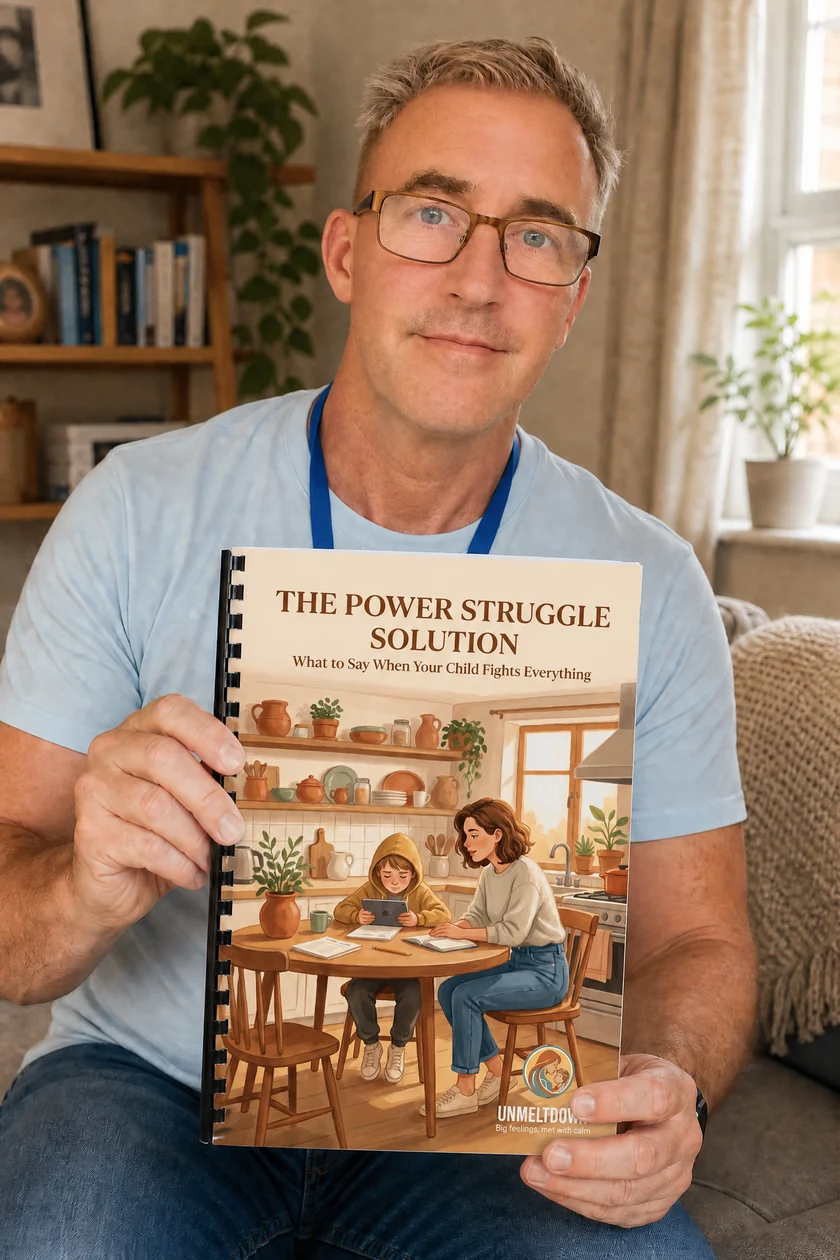
Darren, founder of Unmeltdown, holding The Power Struggle Solution guide at home

The reality

It's 7:42 and the day already feels lost.

The socks are wrong. The toast is wrong. The cardigan is "scratchy" and the shoes are "weird." You've asked them to put them on five times now. Voice rising. They're under the kitchen table, sobbing, with one shoe halfway on.

You haven't even had a coffee. School starts in eighteen minutes. You can feel your jaw locking.

And the worst part — somewhere underneath the panic — is the small voice in your head asking: am I doing this wrong? Because surely most children just… put their shoes on?

Your child isn't giving you a hard time. They're having one.

Why it keeps happening

When a child melts down, the part of their brain that listens has gone offline.

It's not defiance. It's biology. When a child gets overwhelmed — by a sensory hit, by a transition, by tiredness, by a "no" they can't process — their nervous system flips into fight, flight or freeze. The thinking, reasoning part of the brain (the bit you're trying to talk to) goes quiet. The survival brain takes the wheel.

This is why your scripts aren't landing. Why "if you don't put your shoes on in five seconds…" doesn't work. Why bribes don't work. Why reasoning doesn't work. You're trying to talk to a part of their brain that has, temporarily, left the room.

This guide is built around that one fact — and the language, prevention work, and scripts that actually work when it's true.

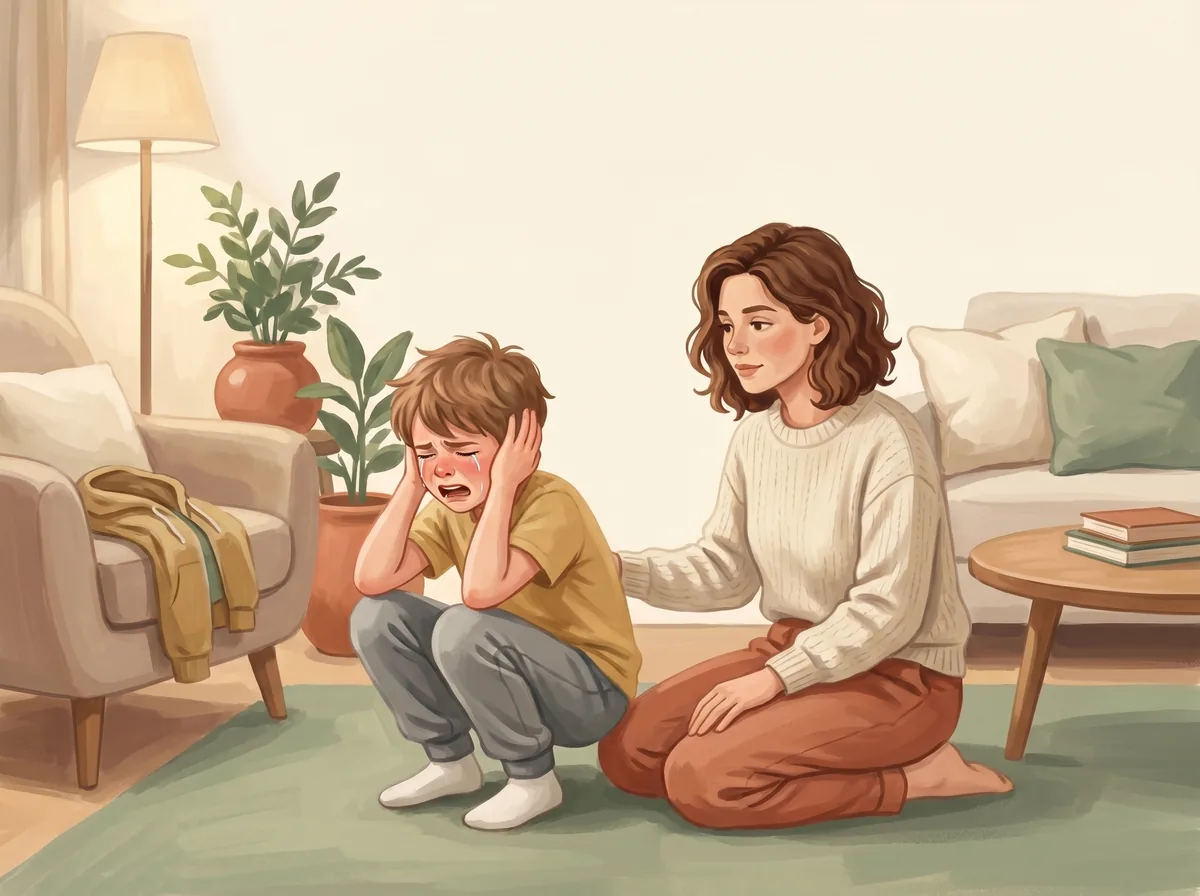
A parent meeting a child eye-to-eye on the floor — illustration from inside the guide

From Part 1 — illustration inside the guide

What's inside

Nine chapters, written for tired parents at 7am.

Not a parenting philosophy. Not a hundred pages of "why your child needs love." A working guide — scripts you can use today, prevention you can put in place tonight, and the brain science underneath it all in plain English.

I

The Reframe

Why your child fights everything — and why "discipline" is the wrong tool for this job.

II

The Language System

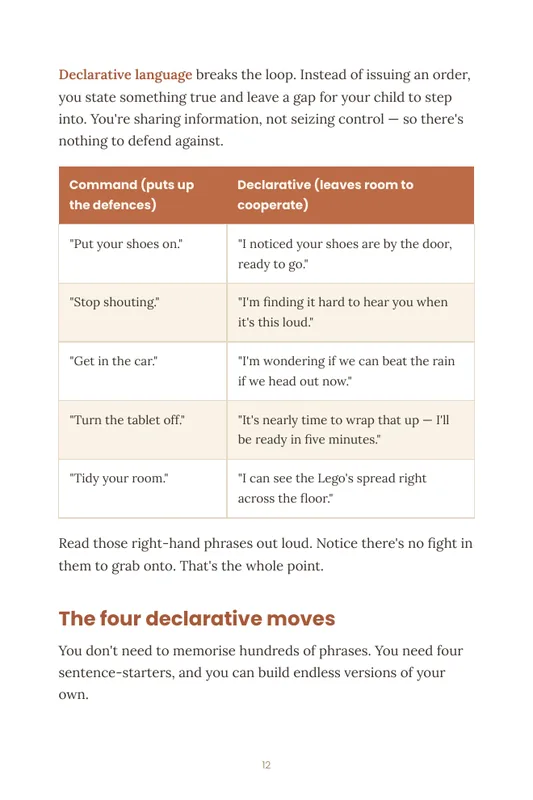
One language swap — commands to declaratives — that ends the majority of power struggles. With a swap table you'll actually use.

III

Before the Storm

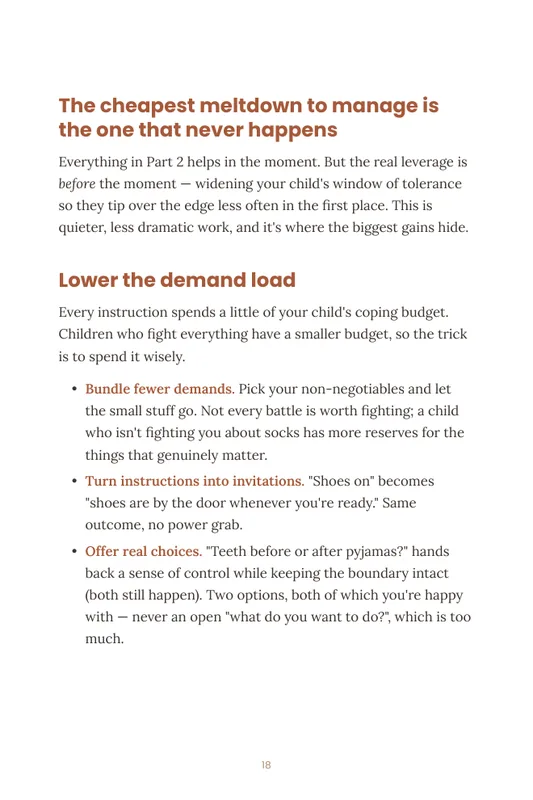
The boring prevention work that quietly stops 70% of meltdowns before they start.

IV

During the Meltdown

What to actually say — and not say — in the eye of it. The co-regulation script in full.

V

After the Storm

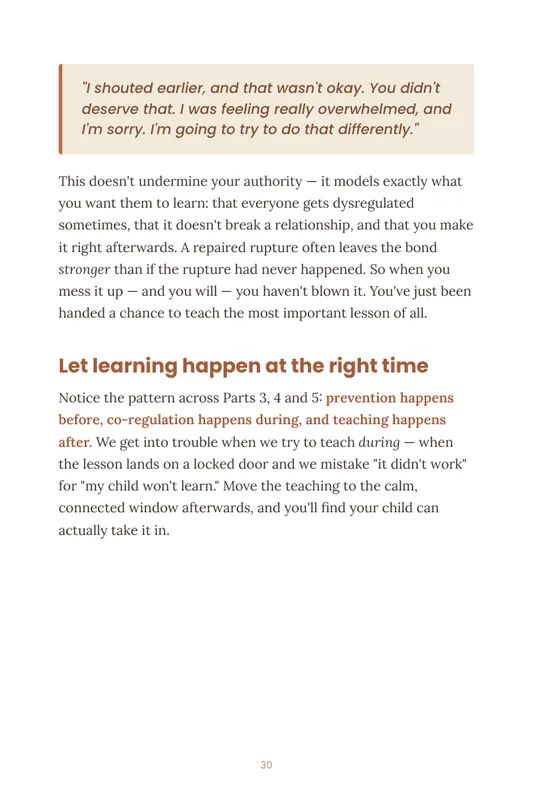
The repair conversation most parents skip. How to do it without lecturing, shaming, or pretending it didn't happen.

VI

The Scenario Playbooks

Nine flashpoints, one playbook each: mornings, the school run, mealtimes, screens, homework, siblings, public meltdowns, bedtime, hearing "no."

VII

Regulating Yourself First

You can't co-regulate from an empty tank. The chapter that's just for you.

VIII

The Toolkit

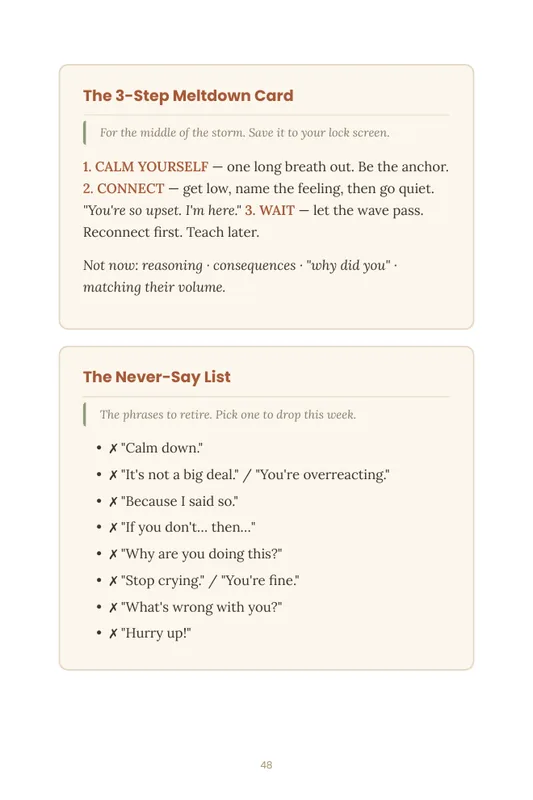
Print-and-stick reference cards for the fridge. The never-say list. The three-step de-escalation card.

IX

When to Reach for More

Honest guidance on when this guide isn't enough — and what to ask for when it isn't.

The school run, defused

"Shoes by the door, jacket on the hook — we leave when you're ready." Part 6 has the full playbook: front-loading, the runway count, the post-school decompression rule.

Mealtimes without the standoff

The role-split that takes the power struggle off the dinner table. You decide what and when; they decide whether and how much. The script for the kid who won't eat anything that isn't beige.

Bedtime, without the marathon

The transition language that gets pyjamas on without bribery. Why the bedtime stall isn't manipulation. The 90-second wind-down script.

Get the guide — £19

Instant PDF · 57 pages · 30-day money-back

A look inside

This is what you actually get.

57 pages. Properly typeset, properly illustrated. Not a Canva PDF.

Sample page from inside the guide

Who it's for

You'll recognise yourself in at least one of these.

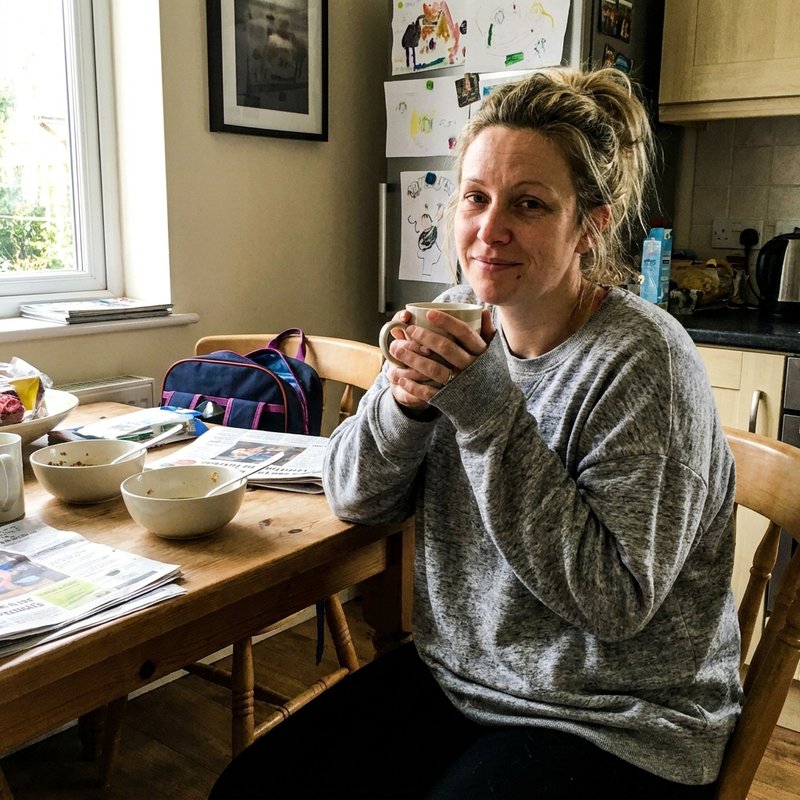
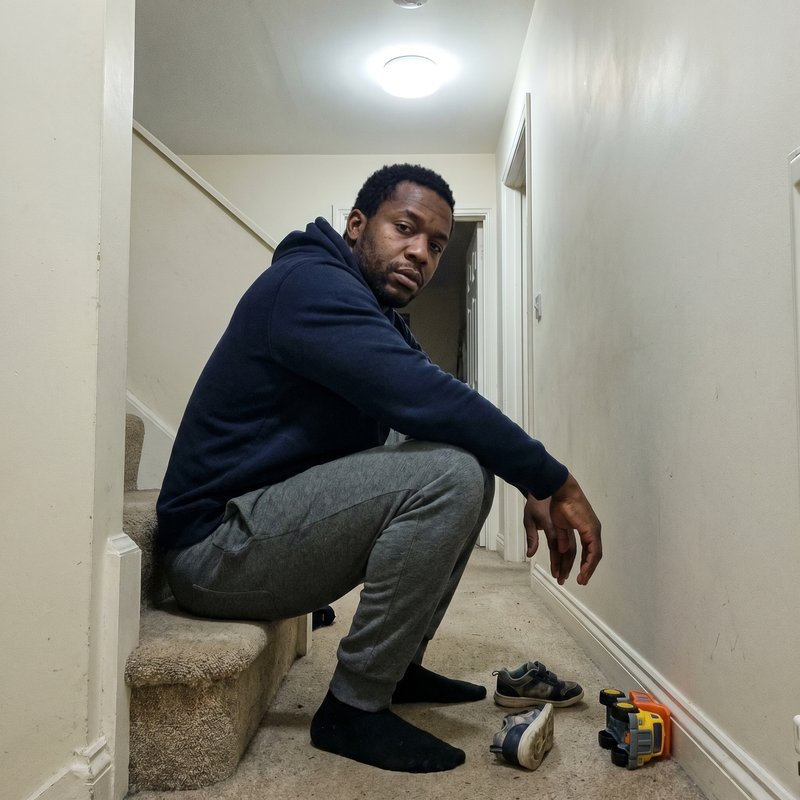
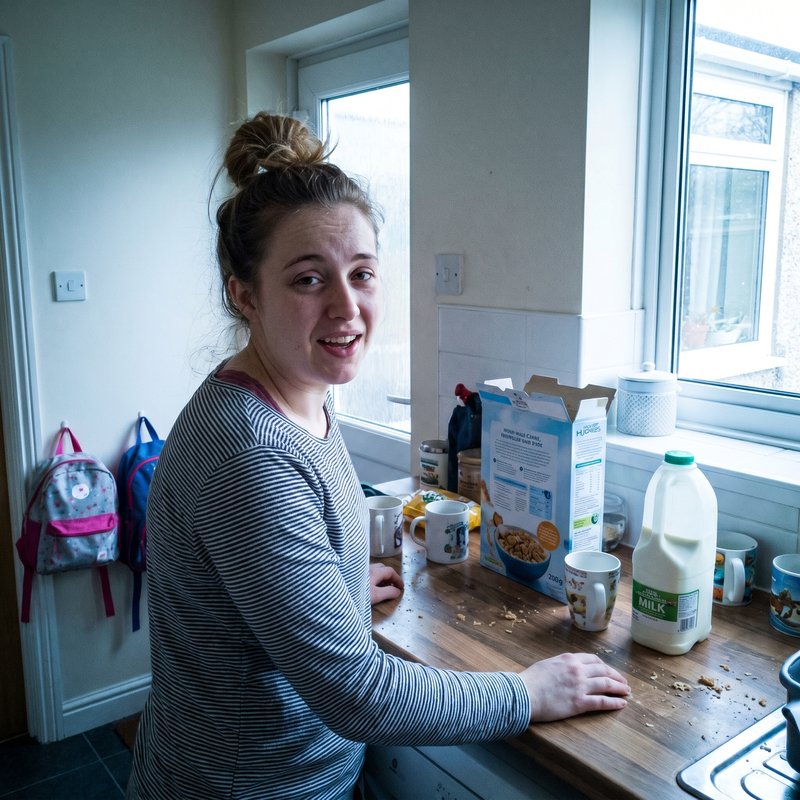
Composite portraits of the parents this guide was built for. If any of these feel like your morning, your evening, or your last Tuesday — you're in the right place.

Sarah

Sarah

38 · Mum to Theo, 8

Theo's bright, anxious, and melts down at the smallest transition. The school run is the worst battlefield — uniform's scratchy, breakfast's wrong, shoes are "weird." Sarah's been told he's "spirited" and "needs firmer boundaries." Nothing has worked. She's googling at 2am whether this is normal.

Jay

Jay

35 · Dad to Mia, 7

Mia has a PDA profile — suspected, not yet formally diagnosed. Every instruction is a battle. "Brush your teeth" becomes a twenty-minute war. Jay's tried sticker charts, reward systems, calm-down corners. He's exhausted and quietly furious at himself for snapping at her last night.

Emma

Emma

26 · Mum to twins, including Arjun, 6 (ADHD)

Mornings are chaos. Screens are war. Bedtime is a marathon that ends in tears — usually hers. She's read every parenting book on the shelf, done two courses, and still loses it at 7pm. The gap between knowing the theory and doing it in the moment is the bit that's killing her.

Get the guide — £19

Instant PDF · 57 pages · 30-day money-back

About the guide

Why I built this.

I'm Darren. I work in behavioural regulation at a service in West Yorkshire, where I spend my days watching what calms dysregulated nervous systems and what makes things worse. Then I come home to my four kids — one of them neurodivergent. No official diagnosis yet, but if you know, you know: same patterns I see at work, smaller body.

What I noticed: there's a yawning gap between what the research actually says about regulation, and what parents are told to do. The advice out there is either too clinical to use at 7am when your kid's screaming about his socks, or too generic — "try positive reinforcement" — to actually land in a real kitchen.

So I built this. Every script in it has been pressure-tested against either what I've seen at work, what I'm living at home, or the frameworks of people who've spent careers researching this. It's the guide I wish I'd had at 6am last Tuesday.

The science underneath

The science behind it — and the dad who lived it.

The scripts in this guide aren't guesswork or one parent's opinion — they're built on decades of the most respected research in child development and nervous-system science, translated into plain words you can actually use at 7am. The science, without the textbook.

Dr Dan SiegelWindow of tolerance. The Whole-Brain Child. The model for why a child's reasoning brain goes offline in a meltdown.
Dr Stuart ShankerSelf-Reg. The science of why "calm down" doesn't work — and what does.
Dr Ross GreeneCollaborative & Proactive Solutions. The Explosive Child. The shift from "won't" to "can't."
The PDA SocietyDeclarative language for demand-avoidant children. The single language swap at the heart of Part 2.
Dr Stephen PorgesPolyvagal theory. The biology underneath co-regulation, in plain English.
Dr Mona DelahookeBrain-body parenting. The relational layer the playbooks are built on.

But here's the part that matters most:

I didn't just read this research — I've lived it. I'm a single dad to four kids, and one of them is neurodivergent. No official diagnosis yet — but if you know, you know.

Every script in this guide has been tested on my own kitchen floor, at 7am, mid-meltdown, when nothing in any book seemed to reach him. I built this the hard way: trial, error, and plenty of getting it wrong before I got it right.

So this isn't theory dressed up as help. It's the science, filtered through a real parent who needed it to work — because I did too.
Honest answers

Things you're probably wondering.

Is this only for parents of diagnosed kids?

No. Written for parents of any child whose nervous system runs hot — ADHD, autistic, PDA, anxious, or just "spirited." Most of the scripts work across all of them because the underlying biology is the same.

What age range is this for?

Roughly 4–12, with most of the playbooks aimed at 6–10 where the scenarios bite hardest. Some scripts adapt down to toddlers, some adapt up to early teens — the brain science is the same; you'll just shift the language.

Is this a replacement for professional help?

No, and the guide is upfront about that. Part 9 is specifically about when to reach for more. If your child's wellbeing or safety is at risk, please speak to your GP or a clinical professional first.

What format does it come in?

A 57-page illustrated PDF. Read on phone, tablet, laptop, or print. The toolkit at the back is designed specifically to print and stick on the fridge.

Can I get a refund if it's not for me?

Yes. 30 days, no questions asked. Email and you'll get your money back.

Who exactly is this for?

Tired parents. That's the whole job description.

One more deep breath

£19. Instant PDF. 30-day money-back.

If the next morning's a little calmer than this one was — it paid for itself.

Get the guide — £19

Secure checkout via Stripe · Instant download

Your payment is safe.

You never type your card details on this page. When you tap the button, checkout opens on Stripe — the payment system trusted by millions of businesses worldwide. Your card goes straight to Stripe over an encrypted connection; this site never sees it or stores it.

How to spot a secure checkout, anywhere: the web address starts with https://, your browser shows a small lock or site-info icon beside it, and your card is entered on a stripe.com page — never typed into a random pop-up.

Not ready yet?

Start with five phrases — free.

If £19 isn't the right call today, that's completely fair. Grab the free guide instead: The 5 Phrases That Stop a Meltdown — the exact words to say in that rising moment, sent straight to your inbox.

Get the free guide

No spam. Unsubscribe anytime.

Get in touch

Got a question before you buy?

Not sure it's right for your child, or want to ask something before you buy? Send a message — you'll get a real reply from a real person. (Me.)

I read every message myself — usually a reply within a day or two.